Friday, 29 April 2016

Stop Neglecting Analytics in Your Customer Engagement Strategy

Customers desire experiences, not transactions.


In a world full of distractions, engaging customers beyond the typical purchasing routine is vital for SaaS success.


And B2B consumers crave unparalleled engagement. They want personalized advice, solution-oriented features, and revenue-generating products.


An IBM annual survey noted that “as many as 65% believe customer engagement will be the primary driver of growth going forward.”


Analytics is one of the few ways to gain insights to meet your customers' needs. It helps bridge the gap between providing a service to solving real challenges.


Enhance the experience between your brand and consumers. Build data into your customer engagement strategy.


It Starts With Value


Studies show that “86% of buyers will pay more for a better customer experience, but only 1% of customers feel that vendors consistently meet their expectations.” That's a major disconnect for SaaS companies striving to improve customer engagement.


B2B customers aren't concerned about aesthetic features. And they aren't amped to hear how your team worked around the clock to fix a bug.


Your consumers want a service dedicated to solving their problems in an efficient manner.


Natalie Chan, an expert handling customer retention at Outbrain Amplify, writes:


“Businesses that focus on customers engagement are focused on value creation, not revenue extraction. These are businesses that know how to engage their customers by providing them with real value whether it be through an exceptional end-to-end customer experience, great content or strong customer support that are about delivering more than the traditional sell.”


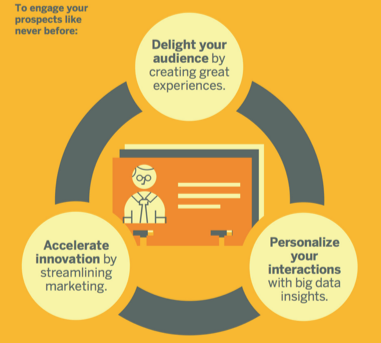
Offering value means addressing your customers' desires. And it's all about how they perceive what's important.


For example, if a prospect is concerned about increasing open rates in email campaigns, it's not in their best interest to discuss layout designs.

engage-prospects


Image Source


Value requires laser-focus. And that's where analytics steps in.


Monitor usage data to assess the customer experience. Track acquisition channels to observe where customers are coming from and if they're converting.


Interview customers and ask them why they chose your product. Figure out how they expect to use your product and what business goals they want to achieve.


Create and deliver unprecedented value. Connect with the customer.


Know Your Buyer


In order for customer engagement to work effectively, your team must know your buyer. And that goes beyond the usual demographics, like annual revenue, company size, and location.


More importantly, for B2B companies, your team must not only focus on the business itself, but also on the employee of the business. Learning about the decision maker is crucial to your sales.


Leveraging big data to better understand and act upon customer behavior, forces you to think differently not only about what data to keep (all of it!) and how long to keep it, but also which data you should begin capturing,” states Duane Edwards, Co-founder and Senior Vice President of Globys.


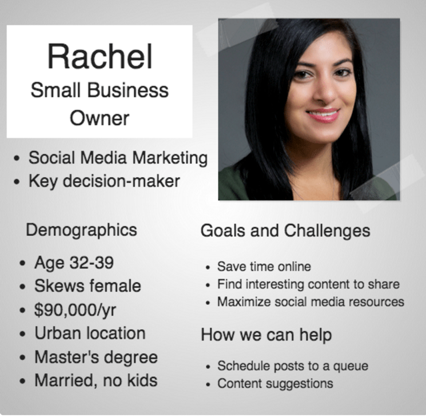
Analyze your primary behavioral data to create in-depth customer personas. Understand the decision maker's goals and challenges. Also, know how you can provide short-term and long-term guidance.

buyer-persona


Image Source


Bruce Swann, Sales and Marketing professional at Adobe, suggests applying predictive analytics:


“Once you've compiled data attributes to create a panoramic view of customers, you can begin to understand and predict customer behavior, which adds depth to that view. Examples include using a range of analyses, including customer value analysis, market basket analysis, customer profitability, response modeling, and churn analysis.”


Use data as an indicator of future behavior. If you know your client's customers, it may lead to helping your client differently.


For example, NoWait is an app that simplifies the process of waiting for a table at a restaurant. Instead of having a guest tote around a clunky pager with a range of 50 feet, restaurants only need the person's cell phone number.


When the table is ready, the guest receives a text. Plus, after dining, restaurants can text customers additional discount offerings.


Moreover, with the app, restaurants learn “who their patrons are, what time they come and go, which patrons come back the most frequently, who purchases more.” This data can be used to create messaging that appeals specifically to each customer.


Know your buyer and your buyer's customers.


Content That Resonates


Content is more than just blog posts. It includes everything from checklists to webinars.


Research shows that “64% of visitors who watch a video are more likely to buy a product online.” Therefore, content isn't just helpful for your brand awareness; it's a vital part of your customer engagement strategy, which leads to sales.


Examine heat map data to improve your content. It will help you learn what content is important to the consumer. Then, your team can focus on content placement and how different images and colors in your content affect your website visitors.


Pete Mehr, Principal at ZS Associates, says, “By quantifying which content the customer engages, and how frequently, it becomes straightforward to continue to provide content back to the customer. This continuing content consists of an ongoing series of messages to a customer.”


Moreover, analytics will uncover which type of content matters to your customer. Is it eBooks? Or maybe 30-second video clips?


Mention understands their audience. They produce content that resonates.


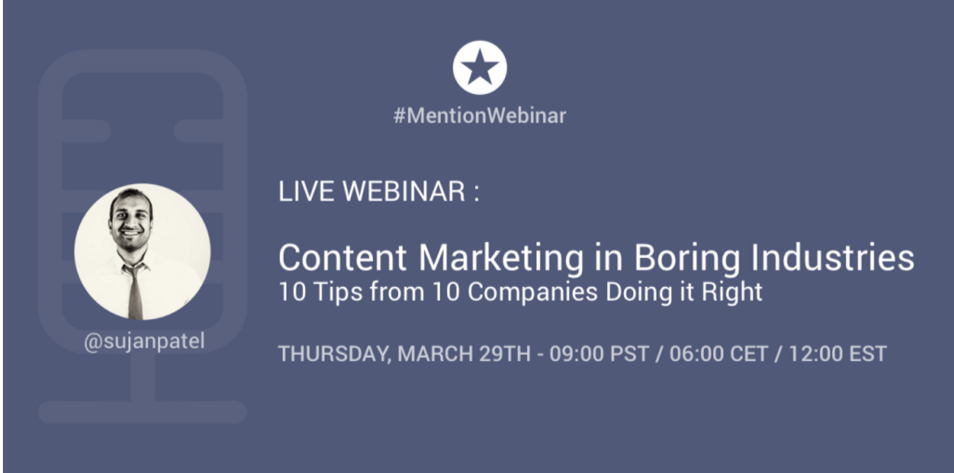
The social monitoring company creates webinars highlighting experts in the field. For instance, Mention invited Sujan Patel (who is hosting a webinar with Kissmetrics next week) to talk about ways to create content for “boring” industries.

sujan-patel-webinar-ad


Study your data to find content that speaks to your customer. It's an effective way to boost engagement.


Multi-Channel Customer Service


In America, “the cost of poor customer service is $41 billion per year.” That's a heavy burden for most companies.


Moreover, a report found that “retailers are not listening and responding to their audience enough. Some 89% of consumers' comments are left unanswered.”


Approach customer service differently. Think beyond phone support and Q&A forums.


Social media has presented another solution. Now, SaaS businesses can provide Twitter and Facebook support.


Under Armour created a Twitter handle solely for the purpose of answering customers questions about their products.
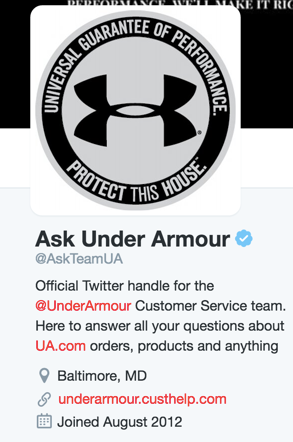

ask-under-armour-twitter


From your analytics reports, determine what channels of support satisfies your customers. What works for your competitor may not work for your SaaS.


“It's not about deploying on all channels, but deploying the right channels that align with your business. Only deploy on the channels that make sense for your business,” says Kate Leggett, a principal analyst at Forrester Research.


In addition, you must streamline your processes when using multiple channels. For instance, phone support data for a specific customer must also be available to your Twitter service reps.


At ComputerWeekly.com, Lisa Kelly suggests that “organisations need an accurate knowledge base where companies can link information from other channels, including peer-to-peer interactions, web self-service and communities, to share with customer service agents.”


It's not enough to offer various customer service routes. Your team must work together to use data to enhance the overall customer experience on each channel.


Respect The Data


Customer engagement isn't anything new. However, your SaaS can approach it differently with the help of analytics.


Add unmatched value to the customer's experience. Use data to gain insight on your buyer's habits and preferences. And provide customer service from a multi-channel perspective.


Stop neglecting, and start respecting your data.


About the Author: Shayla Price lives at the intersection of digital marketing, technology and social responsibility. Connect with her on Twitter @shaylaprice.


Monday, 18 April 2016

Use These 5 Steps To Plan for Better Lead Nurturing

Modern Marketers know that not every prospect is ready to buy now. In fact, according to SiriusDecisions, even the 20% of leads that sales reps follow up on, 70% are not qualified. But it's a mistake to ignore those leads. It turns out that 80% of unqualified prospects today will go on to buy from someone within the next 24 months.


Lead nurturing is a way to help keep your brand front and center when that purchase happens. Marketing automation will also help you learn more about each prospect, so you can qualify them as a real potential customer.


1. Understand Your Buyer

Prospects go through stages. You need to understand those stages and know what content best applies to each. Interview your customers-as well as those that did not buy from you-to define your ideal customer profile and develop buyer personas. What are your customer pain points? What purchase process do they follow? Why should they be interested in your product? Define what messages are most appropriate at each stage of the buying cycle and who is responsible for delivering each communication. Good alignment between marketing and sales will keep branding, voice, messaging, and experience consistent.


2. Pinpoint What Motivates Your Buyers

Analyze your past marketing campaigns and determine how they contributed to revenue. Look at the percentage of responses to campaigns and determine how many leads moved through all stages, and the messages and content offered at each stage.


3. Whiteboard the Ideal User Experience

Come up with a lead nurturing structure that best reflects your buying process, and then look to see where it might be difficult to put into practice. Consider personalizing the experience based on what you know about the prospective buyer. Then modify the flow of communication based on that person's behavior and engagement with your content. Start out with the final goal in mind and create a blueprint. Develop a structure that makes the most sense for your business and try to anticipate any roadblocks to implementing and make revisions. Once your plan is locked down, document it so that you can share it and so you'll remember why you made certain decisions.


4. Plan Your Lead Nurturing Process

Determine the campaign goal, message flow, content offers, communication channels (for example, perhaps email works better than the phone in one stage), and overall cadence based on previous interactions. All of this planning helps define the timing in your automated program. Be sure to think through all possible scenarios. If the objective is to send six emails and make three phone calls over eight weeks, what happens if you don't get the intended response? What happens once someone expires from a nurture program? How do you keep that prospect engaged, and who owns the relationship?


5. Automate Communications

An automated welcome campaign is a great place to get started. Set up automated communications to greet those who enter your database and start delivering educational information. What are the three most important things you want them to know? And what more do you want to know about them?


This is only the beginning to get you started in lead nurturing. Download the Lead Nurturing Guide for Modern Marketers to ensure your success.


How to Craft a Data Management Plan that Pays You Back

When it comes to wrangling and taming Big Data, a data management plan is a solid first step. But what exactly is it and what does it involve? More importantly, how can you create such a plan? In this article, we'll be taking a look at how businesses large and small can create data management plans that are both smart and seamless.


The Old Problem: Silos


Silos were meant to help keep people focused on their respective tasks. Instead, they divide people, waste resources and hamper productivity. The very groups that need to be working together the most, namely sales and marketing, are shut off from each other which in turn stifles growth and innovation.


Instead, creating a more hub-and-spoke collaborative center, where each group feeds into and extracts relevant information from said Big Data, is where forward-thinking companies and organizations are headed.


silos


Image Source: Compendian


Designate at least one person from each group to be the “representative” – and this applies to C-level executives too. These are going to be the people who essentially build and steer the Big Data ship. It's easy to get lost in the sheer volume of information. Alongside these representatives, name people from each group who will oversee the various strategies to ensure that they're continually on point and not being bogged down by minor details and technicalities.


Demonstrate What's Possible


thoughts


One of the biggest sticking points with Big Data is the question “how is this really relevant to us?” Realize that different pieces of the Big Data pie are going to matter to different groups and seeing how it all comes together is like a fantastic puzzle. There's good stuff in the details, as well as the big picture.


At this point, however, it's really easy to get caught up in the sheer volume of it all. But as with every good marketing strategy, you'll need to ask yourself:


“What's going to bring us the biggest lifts?”


And make those your priority. Then gradually trickle down through lesser and lesser priority pieces until the whole thing comes together.


Organization is Just as Important as Execution


business-management

Image Source: Forrester


At this point, ideas should be coming together from all the different representatives and groups you have working together. And it's very likely that you'll want to jump right in and start getting your hands dirty with all the data.  But take the time to figure out how you'll be organizing that information first. If you don't do this at the beginning, the data will start to accumulate like a snowball rolling downhill, and eventually it will bury everyone and everything in its path.


It's also worth noting that your Data Management Plan needs to have security as its foremost priority. Kiki Burton, Senior Manager of Product Strategy at Adobe reiterates on her podcast just how crucial security is when you're formulating such a plan. In her interview, she comments that:


“The ideal [Data Management Plans] has no personally identifiable information. In order to ensure that [it] really upholds those privacy standards, there are a variety of methods to import data in an appropriate way so that it's all anonymous…It's important to really call out that a [Data Management Platform] is not going to be your CRM platform, it's not going to be your basis for all your customer information…instead, it's going to pull specific data from there, but [it needs to] be done in a very anonymous way.”


The First Building Blocks of Your Data Management Strategy


Colourful wooden building blocks stacked in increasing height using individual colours as an educational toy for young children


With this in mind, Kiki further advises that companies interested in building such a strategy take an inventory of all of the first party data they have. First party data includes:


  • Social likes and shares

  • Data from mobile devices or apps

  • User subscription data

  • CRM data


There's also the data collected by surveys, email marketing and other avenues – all just sitting there mostly untapped and unused. Once you have those points nailed down, then you can see about getting other information to round out your user profiles.


You may be surprised to learn what other departments in your newly cohesive group have as data. It may be something your own group never knew about or never thought to use. Here again, when we build these silos (more like giant walls) between departments, crucial information like this tends to fall through the cracks. So it's as much an organizational mission as it is a learning experience.


Decide What Information You're Going to Pull In


Now that you have all the data together, it's time to decide what's relevant. Here again, relevancy depends on your industry and what the end goal is. You could be selling an entirely digital product and be focused on subscriptions and sign ups.


Or you could be a retailer focused on in-store engagements like QR codes, co-branded credit cards and other promotional magnets. All of that information needs to be prioritized and put into the plan. This is what helps you build and “flesh out” your user personas without using any personally identifiable information.


Remember that as your users interact with your site across multiple types of media, multiple devices and different promotions, you'll be gathering information as well as providing them with a branded experience. Data management goes well beyond advertising and seeps into every interaction your customer has with you – from email to shopping in-store, to upsells, down sells and cross-sells.


The Data Economy


The bottom line when it comes to creating the kind of system that pays you back is what Kiki calls the “data economy”. In her words, “it's not just about buying data for advertising; it goes back to this larger, more cohesive personalization message and really having a platform where brands and publishers can exchange data and share data in an open marketplace.” Like it or not, the Data Economy is here to stay, and you'd better start crafting a plan now to help make sense of it. Fortunately, you've now got the starting points and a more concrete idea on what to draw upon to make it happen.


Have You Created Your Data Management Plan?


Have you built a data management plan using the strategies outlined here? How has it worked for you? Share your thoughts with us in the comments below!


About the Author: Sherice Jacob helps business owners improve website design and increase conversion rates through compelling copywriting, user-friendly design and smart analytics analysis. Learn more at iElectrify.com and download your free web copy tune-up and conversion checklist today! Follow @sherice on Twitter, LinkedIn or Google+ for more articles like this!


Tuesday, 12 April 2016

Keeping it Real with Content Marketing: Why Integrity, Storytelling & Creativity Reign Supreme

KEEPIG-IT-REAL-WITH-CONTENT-MARKETING


Marketing is often seen as a game. A game in which the marketers are the strategists and the customers are the pawns. Unfortunately, that is a game in which nobody wins. Marketers may feel a quick rush due to their success but customers that feel duped or mislead will surely, and quickly spread news of foul marketing practices.


There is no shortcut to providing value to customers through your marketing. In fact, now more than ever self-directed buyers are relying on the content they read online to lead their purchasing decisions and if something “feels fishy” they'll quickly move on to a more reputable source.


Because of the amount of content being created today, that also means that not only integrity, but creativity and storytelling are an incredibly important part of creating content that connects your customers to your brand.


At the end of the day, customers want to trust you and feel that the service or solution that you're offering will help them stand out. Below are some examples of how you can keep it real with your content marketing to create a better user experience.


Help Your Customers See Themselves in the Content


lodden-quote-041116


The content that you create shouldn't just be about your brand and what you offer. Instead, your customers should be able to see themselves in the story that you are telling through content. How can this be accomplished?


Two of the best ways are through customer stories and case studies.


Customer stories can be incredibly impactful if done well. This type of content works two-fold. First, your current customers often get excited at the prospect of sharing their personal story and therefore creating an even deeper bond with your brand. Second, studies have shown that 92% of people trust recommendations from individuals over brands which means that your prospective customers are likely to connect with these stories.


Tesla for example, has an entire section of their website dedicated to Customer Stories. These stories are written by their customers and include photos as well as insights into their own journey with their Tesla car.


Tesla Customer Stories


Their YouTube channel also contains videos of their customer's sometimes moving and sometimes humorous stories.


Case Studies can also be a great way to create content that incorporates storytelling and builds trust. A good case study will not focus only on tactics,, but more so how your brand helped a company or individual solve a problem.


The problems and needs of your current customers will be the most telling sign of what your prospective customers are looking for. So, to help attract new customers you need to showcase how you've been able to help other companies/individuals solve similar problems.


Take for instance this case study from our team that focuses on a strategy that helped a B2C company increase conversion rates by 129%.


Paid Search CRO


Other forms of content beyond customer stories and case studies can also help support the goal of helping your customers see themselves in your content. Website copy, blog posts, content assets, social messaging and advertisements should all be focused on customer need first, and what you're trying to sell after.


Write Like a Human Speaking to Humans


Tfishburne-quote-041116


There is no denying that good SEO is still a very important part of creating great content. However, stuffing your content with keywords you want to rank for may get people to your site initially, it won't keep them there or create a good experience.


Instead, time is better spent conducting research to see what questions customers are asking and how they are being phrased. That information can then be used to inform how you go about incorporating key search phrases in a way that is natural and pleasant to read.


B2B marketers have traditionally struggled to humanize their content. Much of the B2B content in existence today focuses purely on the business case for why the VP, CEO, etc. needs the product or solution that they are selling. Many have been able to understand and communicate the business problem and business need, but not the need of the individual actually consuming the content.


This is a big opportunity for B2B (and yes, even B2C) marketers to think a little bit deeper about the actual people behind the personas and begin developing content that will inspire and move them as a person, not a job title.


Open Up & Share


ahandley-quote-041116


It doesn't matter if you're asking people to spend $50 or $50,000, you are asking them to trust that investing their money with your brand will be of a benefit to them. There are often three stories that people tell about their company.


  1. The one that they tell to prospective customers online, in-person or on the phone.

  2. The one that they tell at cocktail parties with their friends.

  3. The real story.


In an effort to build credibility, many companies will tell the very dry and highly edited version of how they came to be, what they offer and what they can do to help customers like the ones they're trying to reach. Unfortunately, when all of the bad or less than ideal is edited out of the story, it can make it harder for prospects to connect with the teams that work there.


Not every company started with millions of dollars of funding and many had to hustle and work their asses off to get where they are today. Your ability to tell that story in a way that inspires confidence (ie: here is what you learned from those experiences), can actually build more credibility with prospects and connect them tighter to your brand.


Help Customers Visualize the Message


PFITZPATRICK-quote-041116


An essential part of learning starting as a young child all the way through college is with the help of visual aids. When you're younger, the images are a much larger focal point than the words because they are a way to help you discover what those words mean. As you get older, visual queues are still used to help explain more complex ideas and processes.


I'm sorry to be the one to tell you but those visual aids don't stop being useful when you graduate. In fact, with the monstrous amount of content that is being created today, compelling visuals need to be a staple of your content marketing efforts to stand out in the crowd.


Visual elements should be included in everything from your blog posts, to larger content assets and social messages.


When is scrolling through their Twitter feed trying to uncover some tidbits to read on-the-go, what do you think will stand out to them? Will it be the precisely 140 character tweet or the message that has the great picture attached? I urge you to go through your own Twitter feed (as I just did) and make note of what stands out to you most.


Twitter example 1


Twitter example 2


This sort of experiment just goes to show that while what you say is incredibly important, what you show people will often be what catches their eye and draws them in.


Be Real, Be Entertaining, Be Useful & Be Creative


There are ways to create compelling content that doesn't play a game with your customers or deceive them in any way. If you can follow the principles above, you are on the path to creating a better experience and stronger bond between your brand and your customers.


Since we are all consumers in some way or another, what are some examples of brands following these principles that have stood out to you?


Header image via Shutterstock


Email Newsletter
Gain a competitive advantage by subscribing to the
TopRank® Online Marketing Newsletter.


© Online Marketing Blog - TopRank®, 2016. |
Keeping it Real with Content Marketing: Why Integrity, Storytelling & Creativity Reign Supreme | http://www.toprankblog.com

The post Keeping it Real with Content Marketing: Why Integrity, Storytelling & Creativity Reign Supreme appeared first on Online Marketing Blog - TopRank®.


Value Force: How to win on value proposition and not just price


A recent question we received is a fairly common concern we hear from readers - customers only care about price - what do I do? So we've decided to answer it here on the MarketingExperiments Blog, since the answer might help you as well. And if you have a question you'd like answered on the blog, let us know.


Thanks for the outstanding workshop on value proposition. I agree that value propositions are the core to growth for any brand but the challenge I have is marketing products in a highly commoditized and fragmented category (olive oil).  Price is such a dominant element of the value proposition that it's difficult to compete unless you're competitive on price, which is a no-win strategy. How have you seen other brands effectively create and market a value proposition that did not rely strongly on price? ”


– Brian


First, let me start by defining terms, which might help. Price is not an element of the value proposition. Price is part of the cost force of the buying decision.


For every purchase customers make, they weigh the cost against the value. If the cost is too high, they will not purchase. So, essentially, a company that does not have a strong enough value force (Vf) must reduce the cost force (Cf) to get the sale.


All that stands between you and the Barbarians at the gate is a good story


As Brian mentions, it is very difficult to succeed by selling on price alone. Mostly because you will be undercut. If you're a retailer, you probably cannot sell cheaper than Wal-Mart and Amazon and still be profitable. And there are many overseas manufacturers who can undercut your price if your product becomes commoditized.


Much like the Roman Empire eventually lost its focus and was overtaken by the Barbarian tribes, these threats are always looming in the distance, waiting to strike when they see an opportunity. And your only protection is the value your product offers and the story you tell through your marketing to communicate that value.


As Marc Lobliner, CMO, Tigerfitness.com, told me, “Differentiate yourself on something no one can compete with. Not price. Someone will always be willing to make less money than you.”


So if you can't decrease the cost force to get more conversions, you must increase the value force. This is where the value proposition comes in.


Wine is just old, expensive grape juice with a really good story


The value force is made up of appeal (I want this) and exclusivity (I can only get this from you).


So your first job is to create value in your product – appealing elements that have some level of exclusivity for your product. And then your next job is to tell that story well.


The questioner asked for effective examples of this. I think a good example that relates to olive oil is the wine industry.


Wine could be a commodity product. After all, it is just old grape juice. And you can buy wine at a low price point. For example, Charles Shaw is sold at Trader Joe's for only a few dollars, earning it the nickname “Two Buck Chuck.”


However, you can also buy a bottle of Screaming Eagle Cabernet Sauvignon 2012 for $14,000.


Really, Charles Shaw and Screaming Eagle are not that different if you take the labels off the bottle. To a neophyte, they're both mostly just aged, crushed up grapes with alcohol.


However, Screaming Eagle Winery and Vineyards has created an appealing, exclusive product for its ideal customer by producing small quantities of wines that have received 99 and 100 points from noted wine critic Robert Parker.


And that story is told well. In this case, because the value of the product is so strong, the story is coming less from the marketing and more from third parties. Listen to how wine critic Robert Parker makes the bottle sing, turning old grapes into a covetable $14,000 product: “The inky/purple-colored, seamless 2012 possesses an extraordinary set of aromatics consisting of pure blackcurrant liqueur, licorice, acacia flowers, graphite and a subtle hint of new oak.”


Building and communicating value


Robert Louis Stevenson said that “wine is bottled poetry.”


But olive oil is bottled poetry, too. And so is printer ink. And ketchup. Your job is to create that poetry and then write the poem through your marketing.


Let's go back to olive oil. How can you increase the value force? How can you improve the value proposition?


Well, I did a quick search on Google Shopping for “olive oil,” and I can get a 25.5-ounce bottle of Bertolli Extra Virgin Olive Oil for $7.96 in a plastic bottle.


But if I search for “organic olive oil,” a 25.4-ounce bottle of Bionaturae Extra Virgin Olive Oil is $21 and comes in a glass bottle.


Aside from glass being a more appealing bottle than plastic, one of the reasons Bionaturae is able to charge three times more is simply because it is a USDA certified organic product. Organic increases the value force (for the ideal customer) because it taps into value that is appealing to the customer, such as  the product is healthier or that it aligns with their values because synthetic chemicals were not used to grow the olives.


So the organic certification clearly adds some appeal but not much in the way of exclusivity. While organic olive oil is somewhat more exclusive than just plain olive oil, there are many brands of USDA certified organic olive oil. So let's take a trip further up the price ladder.


One of the most expensive bottles of organic olive oil on the first page of my Google Shopping results is Minerva Olive Oil, which is $58 for 16.9 fluid ounces of olive oil. Like the Bionaturae, it has some of the same appeal because it is made from “100% organic olives that are pesticide and additive free.”


When I got to the Minerva Organic Extra Virgin Olive Oil landing page, additional elements of appeal are communicated. For example, it won a superior taste award.


But there are elements of exclusivity, as well. For example, it “arrives at your table after being thoroughly tested at Minerva laboratory, one of the 7 worldwide accredited laboratories by the International Olive Council.”


As you can see, I'm not just talking about marketing. And I'm certainly not talking about spin, hype or endless promotions. I'm talking about the creation of and then clear communication of value. This is why some wines sell for two bucks while other wine sells for $14,000 – and why some customers will pay $7.96 for olive oil, while others will pay $58.


How to uncommoditize your products


Sure, it's not a word, but I say if products can be commoditized, you should be able to uncommoditize them as well. If you've decided that your business strategy is not to compete on price, here are a few ideas to help you build that value proposition.


Step #1. Identify the ideal customer


Some people will never spend $58, or even $21, for a bottle of olive oil. They'll spend $7.96 every single time.


And that's fine. However, it doesn't mean you have to compete on price.


You can identify customers that are willing to spend a little or a lot more for your product than the base price and understand what they value.


Step #2. Identify the value your product already offers


Fingers crossed here – but your product already offers some value to the world. It may just be a base level of value that corresponds to the commoditized price for that product.


Or, you may be offering additional value that you aren't communicating. For example, many customers now place a significant value on how their food is produced. If you're producing olive oil grown by family farmers in California from olive trees planted 100 years ago but you're not communicating it to your customers, there may be hidden value that you can reveal with your marketing to increase the value force to your customers.


Step #3. Identify the value your product could offer


Again, increasing the price of your product takes more than marketing. You must increase the tangible and intangible value of your product and then increase the perception of that value with your marketing.


For example, let's say you discover that your ideal customer is worried about inferior quality olive oil being passed off as extra virgin olive oil. You could contract with a third-party service, perhaps a local university, to run tests and certify that your olive oil is the real deal.


This is combining the tangible value your product already had (you've always been selling the good stuff) with intangible value (the third-party verification) to create greater perceived value and a stronger value force.


Step #4: Turn actual value into perceived value


The actual value of your product has no value force until your customers perceive it. And this is where your marketing comes in.


Create content marketing that tells the story of the farmers growing the olives for your oil. Use a third-party seal to show that your olive oil is the good stuff. Use your marketing to help customers clearly understand the value of your product.


And then - and only then - can you increase the price.


You can follow Daniel Burstein, Director of Editorial Content, MECLABS Institute, @DanielBurstein.


You might also like


Value Proposition Development online course [From MECLABS, parent research organization of MarketingExperiments]


Content Marketing: How a farm justifies premium pricing [From MarketingSherpa Blog]


Marketing Strategy: What is your “Only Factor”? [From MarketingSherpa Blog]


MarketingExperiments Research Directory


Consumer Marketing: All that stands between you and Walmart is a good story


Monday, 28 March 2016

The Blueprint: The Exact Links Your Blog Needs to Have to Rank Like Quick Sprout

blueprint


Serious question:


Would you be happy if your blog ranked in search engines as well as Quick Sprout does?


I am sure 99% of bloggers would be ecstatic.


But you’d have to travel down a long road if you want to achieve that.


However, I can show you what you need to do if you’re willing to put in the work.


Obviously, I aim to produce top notch content, but the biggest ranking factor, as you might know, is the number and quality of backlinks a blog has. 


And Quick Sprout has a ton of links:


image02


By taking a closer look at the links, you can develop a strategy so that one day, your blog can have similar types, quantities, and quality of links.


We’re going to look at actual links here: I want to get as specific as possible so that you leave this post with a specific link building strategy in mind.


In order to make it as actionable as possible, I picked one of my posts to break down in great detail. We’ll examine The Advanced Guide to SEO.


It has 842 referring domains and 2,690 links overall.


image11


Not surprisingly, it ranks #1 for searches like “advanced guide to SEO”:


image10


And it ranks highly for even vaguely related searches like “SEO guide”:


image06


That post alone gets more traffic than most blogs get in total, so it’s a good one to conduct our analysis on.


Here’s what I did for the analysis:


  1. downloaded all the backlink data that Ahrefs had on each of the URLs

  2. removed the bottom 80% of links (according to the Pareto principle, the top 20% of links will produce 80% of the results)

  3. removed any leftover spam or nonsensical links (about 10% of the remaining links)

  4. categorized each link by type


After doing all that, which took a while, I ended up with the following results:


image07


This by itself is very useful.


The vast majority of quality links to the page are from blog posts, resource pages, and, to a lesser extent, forum posts.


Clearly, those types of links are most abundant, so basing your link strategy on them would be a great idea.


What I want to do for the rest of this post is to break down each type of link, explain what they are (if it’s not obvious), and show you how you can get them yourself.


Some are easy, some are hard.


You don’t necessarily have to get all the types of links in the same proportions to rank well, but the more you get, the better.


Type #1 – Links in blog posts


Again, 61.4% of the links to my guide were from blog posts.


Now, I kept the definition of a blog post pretty broad, including both short—500-word—articles and massive guides.


Here’s an example of a guide on Smart Passive Income that links to my guide.


And here’s a link in a short Search Engine Watch article.


image12


Both were counted equally here.


These links are as good as you can get:


  • they have diverse and natural anchor text

  • they are typically on fairly authoritative domains/pages

  • they are contextual (appear naturally within the content)

  • they are highly relevant


It makes sense that a post of mine with hundreds of great blog post links would rank so well.


How to get blog links for your posts: Sometimes, getting links from blog posts is a chicken and egg problem.


If you dive into the links to my SEO guide, it’s quite clear that some writers just Googled something like “advanced SEO guide” and linked to the top result.


This is why I’ll continue to get more links to that page even though I’ve stopped promoting it long ago.


However, there are ways to get the rest of those links (which make up the majority).


The most straightforward is cold outreach.


Compile a list of bloggers in your niche (Google variations of “(niche) bloggers”, and use tools such as Buzzsumo:


image05


Then, send them an email telling them about your content and why it’s special.


From here, it’s just a numbers game.


You can typically get about a 5% email-to-link ratio.


If you want 140 links, you’d need to send out emails to 2,800 bloggers.


That’s a lot but possible.


However, like I said, many of those 140 links came after my page was already ranking—let’s say half (or 70).


Considering that you won’t need as many to rank for most terms, you can aim to get about 35 blog links with an initial push.


That brings the number of emails you need to send to 700.


That’s still a lot and will require some digging, but if you want to achieve great rankings, you have to be willing to put in more work than others.


The good news is that this changes over time.


As you build relationships with bloggers in your niche, they will start linking to you naturally in their posts. Or you can just shoot them a quick, friendly email, asking them to include a specific link whenever they can.


Type #2 – Resource collections


The results of the analysis of this SEO guide will differ a bit from an analysis of any other post on Quick Sprout.


That’s because the SEO guide is truly an educational resource.


Even though my other posts are also educational, they wouldn’t be considered “resources,” which is a special distinction given to the most thorough pieces of content.


But because it is, about 20.6% of the links to my guide came from resource pages.


These pages have large collections of the best resources on different topics (usually marketing and business in this case).


Here’s an example:


image00


They’re not as good as blog post links, but they still have a few things going for them:


  • the pages often have a lot of authority

  • the pages are highly relevant because the links are grouped with similar resources


The downside is that you’re sharing that link authority with often 50+ other pages.


Getting resource page links: Some you will get naturally if you start to rank well or get discussed a lot on social media.


However, you can almost always email the person who created the list and ask to be included.


A short email like this will get a good conversion rate:


Subject: Your resource page for (topic)


Hi (name),


I came across your resource page on (site) and learned about many new great tools. In particular, I’ve already started using (resource #1) and (resource #2) from your list.


So, thank you for that.


On top of that, I wanted to let you know about one more resource. Full disclosure: I created it.


It’s called (name and link to the resource).


The reason it’s so special, and deserves to be alongside those other great resources, is because (give 1-2 sentence description of the best feature).


I just wanted you to be aware of it.


Thanks for your time!


(your name)


I encourage you to spend 10-15 minutes actually going through some resources on their list instead of faking interest. Authenticity will get you a much higher success rate at getting links.


Type #3 – Forum posts


Third on the list were forum posts, which made up about 8% of the links.


These links were mainly found on forums like the Warrior Forum and Reddit, like this one:


image08


These types of links are:


  • contextual

  • highly relevant

  • have good anchor diversity


But typically, they aren’t on high authority pages.


It doesn’t mean they’re not useful, but I wouldn’t spend too much time trying to get them.


How to get forum links: If you create something great and promote it well, it will get talked about in forums without you having to ever target them specifically.


However, if you want to ensure that you get links from forums, or you just want more, you can post on them yourself.


The key part of doing this is actually becoming a part of the forum. You should regularly post and become a part of the community; otherwise, members will think you’re just a spammer.


When the time comes and you release a post, you can make a few postings in different but appropriate sections of the forum, saying something along the lines of:


“I noticed that a lot of people struggle with (topic). I spent about 20 hours putting together a step-by-step guide to (doing something).”


Then, you post most of the body text in your opening and include a link back to your actual post before or after it.


That’s the safe way to do it.


Type #4 – Social media


It’s clear that while Ahrefs is one of the best backlink collectors, they have some work to do with social media.


My analysis showed about 2% of links came from social media, or just 5 links.


Considering it’s been shared hundreds of times on various social media platforms, it’s clear that Ahrefs missed some.


image09


Regardless, these are fairly low quality links (in terms of SEO, not traffic) and likely didn’t affect rankings much.


I still think it’s a great idea to promote content on social media (which can lead to other types of links as well). I’ve written about this topic many times in the past. Here are a few of my best resources to follow if you want more social media links:


Type #5 – Guest posts


There are a select few sites that I regularly guest-post on.


When I do, I look for opportunities to link to my best content (when it’s appropriate and of course no-follow these links).


For example, I linked to the post in question in a post I wrote for Entrepreneur.com.


image14


While I didn’t purposely try to link to my SEO guide beforehand, I’ve linked to it 5 times by chance over time.


If you need help getting guest-post opportunities, start with these posts I’ve written:


When you link out from guest posts (and no-follow the links) other people see them and naturally find your pages, share your content on the social web and even link to it from their site.


Type #6 – Podcast/Interview


Another solid type of link is a link from a podcast notes page or an interview (which may not always be on a podcast).


I’ve spoken on a few different podcasts and often mention my SEO guide.


image04


When you mention something, the host will put a link on the podcast notes page:


image01


It’s easy to get the links you want once you’re on a podcast. The tough part is getting people to want to talk to you.


Below are a couple of resources that can help you get interviewed.


First, “How to Become the Person Everyone Wants to Interview”, which I wrote a few years ago.


Secondly, refer to tactic #4 of this post, which just about anyone can put into action right away.


Type #7 – Roundup


I also got a few links from expert roundups for this post.


image13


In a typical expert roundup, someone will put the same question to a bunch of “experts” and post all the answers.


I don’t think anyone has ever had a problem with an answer that includes a few links.


Even mid-level bloggers get contacted to do these often, but if you’re not there yet, or want more, you can easily get included.


All you need to do is search for “(niche) expert roundup,” and make a list of all the ones you find.


Then, contact the creators with a message along the lines of:


Subject: Expert roundup on (site)


Hi (name),


I saw your expert roundup on (topic) today, and I think it turned out really well (shared on Twitter!).


If you’re planning to do any in the future, I’d love to be included.


I’m a (quick explanation why you’re an expert – include impressive metrics if possible).


Also, let me know if you need a bit of help promoting anything. I’m happy to share a great piece of content.


Cheers,


(your name)


No hard pitch required. The main thing most roundup creators are looking for are social shares and traffic, and you’re offering to help with that.


Type #8 – Image site


This is an extremely simple link to get, and you don’t even have to create it yourself.


When you create “epic” content, I hope you’re considering design.


And if you are, you’re probably not hiring a cheap designer off Fiverr.


When you hire a talented designer who wants to do great work, they also tend to want to show it off.


Most graphic designers have accounts on sites such as Behance and Dribbble, which are both authoritative sites.


For example, many images from my advanced guides have been shown off on these sites. Here’s a page with a link to my advanced guide to SEO.


image03


If you specifically want these kinds of links, you could always encourage your designer to post them around even though they will likely do it on their own.


Conclusion


The great thing about this analysis is that you don’t have to take my word for it. If you have an Ahrefs or Majestic account, you can do this analysis on your own.


And not just for Quick Sprout, but for competitors in your specific niche.


From this analysis, you know the types of links you need to have to rank well, really well, for even competitive searches.


You also know how to get them.


The only thing left to do is go get them and reap the rewards.


Do you have any questions about the analysis or ways of getting each type of link? Leave them below in the comments section.