Thursday, 11 June 2015

The Secret of Perfect Workplace Culture

Fresh sushi, made in front of you? Really?

Have you felt the twinge of envy when the rumor goes around about what’s on the menu at Google this week? Have you thought, “If we do that, then we’ll have ‘enviable culture’ too?” Would Nap Pods make all the difference? Have you wondered if culture really is all about perks, or if there’s something more important?

According to Deloitte Global Human and Capital Trends 2015, ‘Culture and Engagement’ is the highest priority on the corporate agenda.

It’s well documented that the strongest cultures attract and keep talented people, with predictable results for the bottom line. Sturdy cultures get stronger, and conflicted ones, weaker. Yet the gap between how important culture is, and how ready we are to make it that way, continues to widen year on year, according to Deloitte.
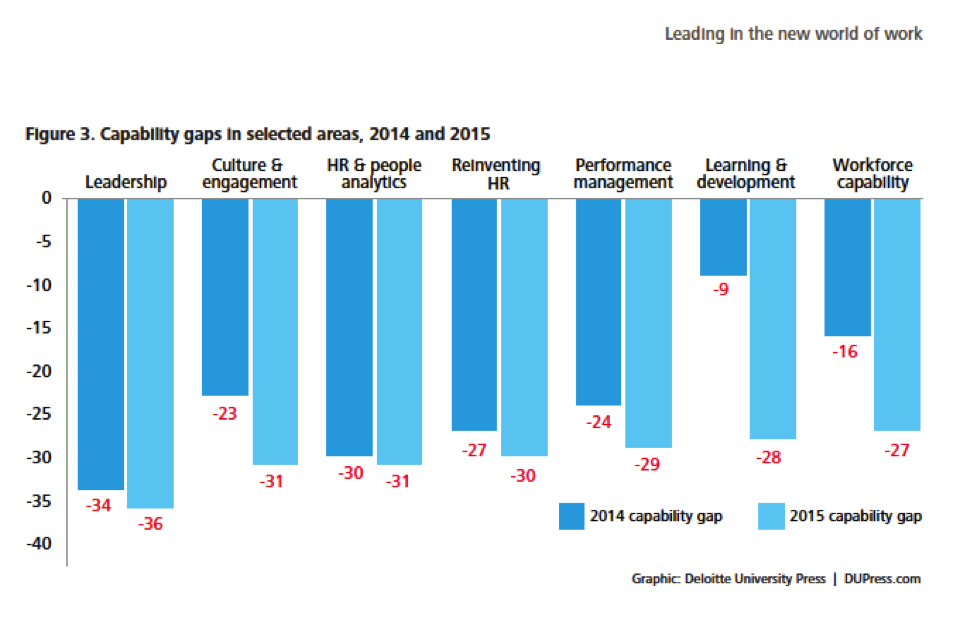
capability-gaps-in-selected-areas

Source: Human resonance for leaders pap 2015

Why is the culture and engagement capability gap growing?

A piece of foundational philosophy needs to be added – or in some cases, replaced. Philosophically, these statistics suggest that many corporates are becoming unwittingly hamstrung. They’re used to solving things and operating things and measuring things, in terms of ‘I’.

If it worked back in the day (or was more easily hidden behind corporate structure and hierarchy), it doesn’t work now in this age of transparency and connected-ness. This is why culture is now top of the agenda: it’s governed by a different rule.

Culture depends on motive towards other people. Other people matter, and they need to matter more. You don’t just have to show you care. You don’t just have to say you care. You have to want to care, in order to bridge the capability gap.

What destroys our cultural efforts?

Culture is about relationships; it’s what happens between people. It’s not about ‘I’, and it cannot be ‘solved’ with ‘I’ thinking about ‘I’. Yet most of our performance measurements are in terms of ‘I’, or ‘things’.

This is what derails many cultural initiatives. We think we’re about people, but we’re mostly about things – and we don’t like that. In fact, we lie to ourselves about it.

“The world wants to be deceived” – Petronius

We want to be deceived about how much we care. Though we have some interesting tools and metrics that point to this, they are flummoxed by deeper motive, which are difficult to measure. The reason seems obvious:

Motives change the second we attempt to measure them.

Culture is a motive barometer. When people are objectified, culture turns sour.

Objectification devours strong cultures – and it’s catching.

People are not ‘things’ that get in our way. People are not problems to be solved. People are not tools to be used. People are people, each equally important. When we see this, we are wholehearted towards them, and our results reflect that motive. We think in terms of ‘Us’. When people are objects to us, we think in terms of ‘me’, and our actions and results reflect that motive.

No wonder ‘engagement’ is so difficult to pin down. Trusting relationships depend on motive. No wonder leadership is turning inside out; influence depends on motive too. Cultural change requires a fundamental commitment to a philosophy of ‘us’ rather than ‘me’.

Replace Old Myths with Powerful Truths

Out with the old thinking about people. This is the age of transparency and connectedness. Our challenge is to actually care, not just make it look like we do.

Truth 1: We are all in charge, and we’re all in charge of culture. It’s about time, and it’s good. It’s simple (people are people) but not easy (which is why the capability gap is growing).
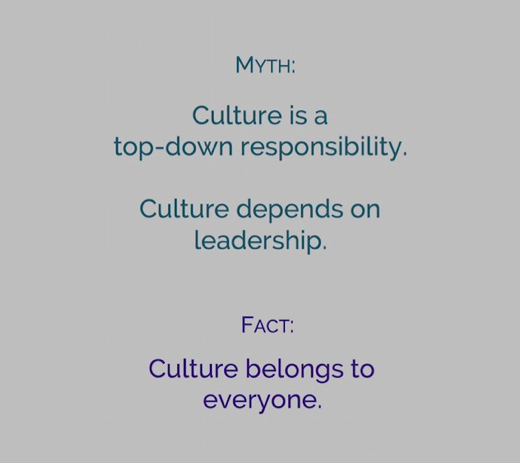
culture-is-top-down-myth

Truth 2: Culture isn’t just important for results – it IS the result. Performance comes after.

Truth 3: Culture doesn’t like being measured (although it is forgiving). Culture does not necessarily comply with ‘cultural goals’ and ‘cultural strategies’, because it is exists between people.

Truth 4: Culture sees through selfish motives (although it tries to retain trust, because people are human, and we humans long to trust).

Truth 5: Culture can’t be faked. Fakery is like a cold draught, causing goodwill to collapse and suspicion to solidify. A sham culture strategy sets one step forward, then several back.

Truth 6: Culture can be helped by ‘good cultural behaviors’, but these are no guarantee. If we think we can control culture with behavioral strategies alone, then we’re likely to discover we’re wrong in various expensive ways.

Truth 7: Culture can’t do half-heartedness, however understandable it is. It needs courageous, wholehearted people.

“What is required is a deed that a person does with their whole being”

– Martin Buber, I and Thou

Truth 8: Corporate failure is different now. Failure is a failure to connect with each other wholeheartedly. Corporate success requires the whole heart; the structures that allowed us to hide have gone. How you are towards people IS the crucial ingredient in the cultural recipe.

Truth 9: Culture is ambushed by the intellectual and the expert.

Being an expert is absolutely no guarantee of genuine connection. I’m an expert at coaching, relationships, influence, but … I can run an enlightened corporate leadership seminar, connecting all day, being marvelous (why not?!) and yet find myself at war with other drivers as I hurtle home.

Advertising ‘the right way’ is a beginning, but it is not the end result – just as reading this post might be motivating, but it’s not the outcome (yet).

Culture needs to be expounded, not advertised. To lean on (a rather overworked) Gandhi, we need to ‘be the change we want to see in the world’.

Truth 10: Culture is easier said than done. Heck, we’re good at knowing what to do. The next bit’s more tricky though, isn’t it? It requires constant personal risk. Vulnerability. The possibility of being changed by someone else.

People who are courageous enough to be open, vulnerable and real, harness people together to perform. Defensive, fearful and divisive cultures turn people inward and against the common good.

Truth 11: Real, strong culture is challenging and tough: There is no room for moaning, whining, false-victimhood. Being true in relationships requires us to stand our ground. Nothing flimsy here. Backbones are stronger than in the old world of ‘I’, because there is no wriggle room.
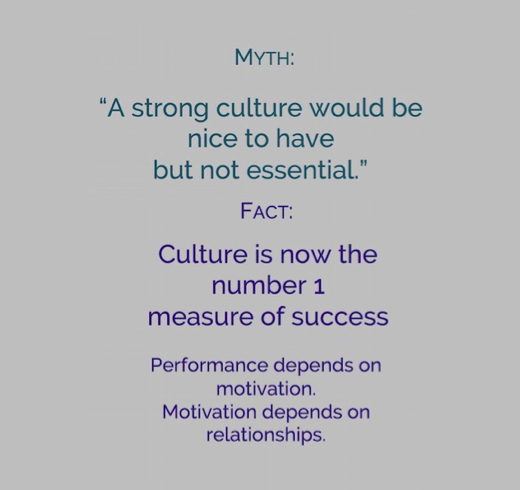
myth-a-strong-culture-would-be-nice

Can it be done? Yes! Every effort counts. Let’s dive in:

10 Ways to Make Your Culture Magic

You’ve got to admit, it’s great news.

We’re used to being told that we’ve got to learn new stuff, master behavioral programs, brush up on people skills.

But there’s no one magic action that guarantees strong culture. We can pay lip service to good culture – do all the ‘good’ actions – but if we do the right thing for the wrong reason then we do more harm than good.

So what matters is who we are doing it for. Are you in your work for ‘me’ or for ‘us’? Magic is automatically present in anything you do, when you’re in it for us. When other people matter to you as much as you do.

When they do, your purpose is aligned with theirs. Your motive is transparent. That’s what makes or breaks corporate culture.

The 2015 results are in from GreatPlaceToWork.com. Let’s learn about intention and motive from 10 of the latest winners of their Best Workplace Award:

1. Do what you say you’re going to do, with good intent

Follow-through is everything. In strong cultures, “People trust feedback will be confidential and action will be taken to make us a better place to work, says Ryan Cheyne, People Director of Pets at Home. (#15 in the UK)

David Smyth, Director of Swansway Garages, (#21 in the UK) agrees. “Listen to what the feedback tells you, make a plan; then act on it, don’t just talk about it.

2. Be Transparent: Trust and involve people in decisions that affect them

Allow yourself and your decisions to be changed by what other people need. It’s easy to say, but feels like a big risk.

&samhound, the Dutch consulting company (#5 in Europe), hold their top leaders meetings in a ‘fishbowl’ setting, surrounded by most of the companies 100+ employees. Everyone gives their opinion on strategy and other key issues.

Credit Acceptance of Michigan (#37 in the USA) sets transparency standards in the finance sector.

Employees say it has “the best attitude toward employee needs and wants that I have ever seen. The company is very transparent in its dealings. We are given the whole scoop on current and future projects.”

3. Notice modesty, humility and a hard-working heart

People who genuinely care stand out as an inspiration. Become such a cultural ambassador by quietly leading and recognizing others who want good change.

Employees at NetApp, (#1 Multinational in Europe, #35 in the USA), lead their own Guiding Coalition to speak out, lead and provide feedback, going beyond their work responsibilities to reinforce cultural values. Likewise as Chris Oglethorpe from Wragge Lawrence Graham in the UK stresses, “A great workplace doesn’t just happen – it has to be worked at and maintained”.

4. Enable people to be able to solve their own problems by strengthening relationships

Culture takes a dive when we wait for other people to change. It becomes a culture of victimhood. People problems are escalated to management to solve, wasting time and resources and putting pressure on leadership.

Now that structures are more flexible, we must lead the change ourselves through responsibility in our relationships. “Create a culture of ownership and give permission; many issues can be resolved by the teams”, says Fiona Roberts, HR Director at Volkswagen.

5. Be someone others can be themselves with. Be human.

There is no limit to the diversity of us humans, is there?! Yet we still judge, still objectify, and we still have work to do. Knowing that we’re flawed helps culture to be forgiving. Culture accepts that we can only do our best. It’s human. It does not demand perfection.

Theresa McHenry, HR Director at Microsoft, (#5 in Europe) recognizes this need to keep learning from and about each others differences: “We need to continue to focus on creating a diverse experience, rather than a ‘one size fits all’ approach”.

6. Go out of your way to support other teams

It’s easiest to objectify other teams when things go wrong, using them as an excuse for poor performance. Successful teams breed strong cultures by constantly building relationships with all teams.

Other teams need to know – and to feel – that you ‘have their back’ – you’ll help them through problems and mind about them as people.

Unengaged teams quickly escalate problems and trap organizational resources. Tiffany Lath, VP and General Counsel for Rackspace (#6 in the UK), helps teams strengthen relationships: “Our culture contributes to engagement. Teams work collaboratively to ensure it stays alive and well”.

7. Make hierarchy structural only

After centuries of embedding organizational pecking orders, we can be forgiven for wanting to make ourselves and our needs more important than other peoples. Happily, power is shifting, bringing with it a challenge for us all. We all now have a greater capacity to influence. Every person’s influence counts more. And our influence depends on how we see other people. It’s a delicious virtuous circle that lays down a moral gauntlet for everyone. Sharing control felt like a risk in the old world, but in this new connected economy, it’s the safest way to be.

How to do it? Victor Buzachero of Scripps Health has embedded a Horizontal Management Framework to shift Scripps from silo to system-thinking, to make the workplace better for everyone.

“Truly becoming a more democratic workplace is not easy. It requires dedication and a willingness to share power”, says Erik van Reit, Director of Great Place to Work.

8. Be in it for the long haul

Relationships stay alive forever – make them of long-term benefit. Employees are proud of working for a company such as the Danish-born Novo Nordisk, (#11 in Europe) which is “in it for the long haul, not just focusing on the short term.”

9. Stand for yourself, your people and your culture.

Most people won’t, because it’s easier not to be responsible. But there will be people making a quiet, sustained push towards a better workplace. “Our team really values the effort that goes into developing our culture”, says MD of Medela UK, (#4 SME, UK) Paul Furlong.

Finally,

10. Be wholehearted for your people.

It’s you that makes the difference to your culture. People cannot ignore wholeheartedness, because of the courage it takes to keep faith in other people. You’re the person I’m talking to. Don’t give up on your workplace culture.

Never believe that a few caring people can’t change the world. For, indeed, that’s all who ever have. – Margaret Mead, Human Nature and the Power of Culture

Strong cultures are made by people who know their colleagues are the best there are – whoever they are. That’s because genuinely strong people invite strength in other people. Trust and wholeheartedness are the substantial challenge strong people lay down. Accepting this challenge as an equal is what makes you one of the ‘best’ people. You step across the line between weak and strong culture when you are able to give people agency – power and responsibility for their own motives.

The secret to an invincible culture?

The statistics are only stating the obvious.

We’re all human, and we’re in relationships forever, whether we like it or not. It’s just easier to see now. We’ve got the tools to measure, and we’re paying attention in a new way. Corporate performance depends on it.

Our cultures continue to deliver faithfully on motives in relationships.

I or I-Thou, said Martin Buber.

Me or Us.

One way or the other.

About the Author: Rachel Pryor, Leadership, Culture and Conflict Resolution Pro, is the founder of www.MeOrUs.com, Performance Through Relationships. Her workplace relationships app, Us:Work, just launched on iTunes

Where Social Media and SEO Fit in Today’s Content Marketing Mix

Search Social Content Marketing

Whether your role is in search, social media, marketing communications or PR, the importance of content marketing is unmistakable.

Brand content budgets and participation are up with the vast majority of B2C and B2B marketers now using content marketing. The industry is coming together on best practices and organizations are evolving their structures to include roles like Chief Content Officer and Brand Journalist.

While there is growing synergy between search, social media and content marketing, they don’t often function collaboratively in organizations. There are also some misconceptions about what content marketing really is.

This post will dig in to some of the realities of incorporating an integrated approach that leverages the best of search, social media and content marketing, while dispelling some of the myths that keep integrated efforts apart.

Be the Best Answer

Optimized, socialized, publicized and influencer activated content is essential for reaching information hungry, multi-tasking audiences who are bombarded with new messages every day. In order for brands to be credible and prominent on the search and social web for their customers, they’ll need to understand the best of each discipline and how to put them together. SEO can deliver content-rich answers to buyers at the moment of need, and social media can provide the means to connect and engage. Both publicity and influencer relations provide credibility and reach. All rely on content to achieve success.

While many marketers will debate what comes first, content, social media or SEO, the most practical approach is to use the tactics necessary for your target audience in order to “be the best answer” wherever customers are looking.

SEO is the Condiment, Not the Sandwich

More than keywords and links, search engine optimization is an important part of the success equation when it comes to content marketing. While SEO has traditionally been able to drive online marketing performance on its own, search engine updates to address content quality and the more conversational nature of search behavior have combined with the growing popularity of social networks to change the SEO landscape forever.

Think of SEO this way: If a customer-focused content marketing program is the sandwich, then SEO is the mayonnaise. It touches nearly everything and enhances the overall flavor of the sandwich. But on it’s own, not very appetizing.

SEO for Content or Content for SEO?

Many SEO-turned content marketers are focused on creating more content or creating content as a means to attract links. This is a similar approach as when social media became popular in the SEO world. Social networks and media use was focused on attracting attention to further attract links, not to create relationships, engagement or inspire transactions and referrals.

A simple comparison tells the tale: Having 500 optimized blog posts on every derivative of a 50 phrase keyword list that no one wants to read is no more useful than attracting 50,000 drive-by visitors to your site for 10 seconds each from Reddit. Being held accountable to superficial performance metrics drives superficial tactics. Do you really want your marketing characterized as superficial?

Understanding the difference between mechanical tactics and meaningful outcomes is an important distinction when hiring content marketing professionals or a content marketing agency. It can mean the difference between a keyword hell of thin content, or a content portfolio that serves real customer interests and proudly represents what your brand stands for.

Optimize Your Opportunities

Search marketers are, by their nature, opportunists. Each time a major trend in online marketing emerges, from blogging to social media, SEOs have adapted and engineered their way to discover every possible workaround or tactic to create a marketing advantage. This opportunism has extended to content marketing as well.

Operating within the guidelines of quality marketing, such adaptability is a highly valuable perspective to take. However, when opportunism bleeds into manipulations outside the scope of search engine guidelines, the risks can turn out to be painful and sometimes disastrous to a business.

But here’s the thing: Google is a battleground for SEOs and those with real, on the ground experience that have been able to adapt successfully can become some of the most valuable marketers you will ever find.

Being both creative and analytical as well as lateral thinkers, marketers with an optimized state of mind are particularly adept at finding solutions to complex marketing problems. But those SEOs that are still stuck on content marketing as “more fuel for keywords” and social media as “link building” should probably be avoided.

Social vs. SEO Focused Content Marketing

There are any number of benefits for engaging a SEO focused agency for content marketing compared to a social media agency. They each play essential roles for content amplification at all stages of the buying cycle. Here are a few common characteristics of each:

SEO Focused Content Marketing

  • Tactical approach: more content equals more search presence
  • Topics derived from actual search demand
  • Keyword managed content plans tied to performance
  • Continuous cycle of performance improvement using search analytics
  • Organic amplification is “built-in” to content creation
  • Content promotion, link building and social promotion
  • Good SEO is good user experience
  • Technical optimization
  • Performance is focused on search KPIs and conversions

Social Media Focused Content Marketing

  • Topics focused on brand and messaging
  • Shorter form content: status updates, blog posts, image tiles
  • Topics managed by social content calendar
  • Social monitoring surfaces new, real-time content opportunities
  • Amplification is often organic but increasingly paid
  • Influencers engaged to co-create and promote through social
  • Performance is based on views and engagement
  • Conversion and ROI are more difficult to measure with confidence

What should companies look for with search and social media when considering content marketing resources?

Goals and accountability are essential for an optimized and socialized content marketing program to succeed. For an integrated approach, here are three of your most important considerations to ensure content performs for customers and your brand.

  1. Attract –  How will the particular content object attract exposure? Will your content perform as part of an ongoing narrative? Will it be a part of a sequence? Will it be connected to other content objects through links, repurposing or curation? Where content is promoted on social networks will matter for attraction as much as what phrases and questions are used for search engine optimization.
  1. Engage – How will the content object be meaningful to the reader such that they interact, react and respond to it?  What context needs to exist in order for the content to be so relevant that it inspires action? Social Media and Search both play a role in developing the context for engagement. When they interact with what they find, does the customer think, “Yes, that’s exactly what I was looking for”, or something else?
  1. Convert – How will the optimized content object persuade the reader to take the next step? Each content object can play a role in guiding the reader from one stage to the next in a brand and customer relationship. From awareness to purchase to advocacy, conversions are happening at each stage whether it’s a social share, subscribing to a newsletter, downloading a white paper, signing up for a webinar, filling out an inquiry form or making a referral.

Within your content plan, think about how you can make these actions easy and intentional for the target customer.  An optimized content plan means being accountable to discovery, how it’s best consumed and what messages will inspire action.

Remember, content is the reason search began in the first place.  Take an optimized approach to incorporating search, social media, publicity and influencers with your content marketing programs. Make sure your content is accountable for attraction, engagement and conversion. With that focus on accountability, the investment you make in high quality, optimized and socialized content will pay returns over and over again.

If you haven’t read it yet, be sure to check out Optimize for a full plan on developing an integrated content marketing program.

Image: Shutterstock


Email Newsletter Gain a competitive advantage by subscribing to the
TopRank® Online Marketing Newsletter.

© Online Marketing Blog - TopRank®, 2015. | Where Social Media and SEO Fit in Today’s Content Marketing Mix | http://www.toprankblog.com

The post Where Social Media and SEO Fit in Today’s Content Marketing Mix appeared first on Online Marketing Blog - TopRank®.

Wednesday, 10 June 2015

5 Tips to Increase ROI With Marketing Analytics

Today, data is floating all around us. From unique visitors to social media followers, senior management may be confused and overwhelmed about how marketing analytics relates to ROI. Setting clear, short and long-term objectives is just the beginning of improving profits and resource allocation.

Brian Massey, the Conversion Scientist at Conversion Sciences, suggests that we “stop thinking of analytics as a discipline of data scientists,” instead we can make good decisions from unexpected sources. So, that’s my challenge to you.

Rev up your ROI by recognizing distractions and executing differently. Here are five tips to help your business thrive:

1. Plan for ROI

Value exists in quantifying the expected outcomes from marketing investments. Learn what to measure, when to measure and how to measure. In order to achieve your goals, establish specific steps to move the process along.

According to DialogTech’s 2011 State of Marketing Measurement report, 82% of marketers say their executives desire every campaign measured, but less than a third can effectively evaluate the ROI of each channel. Moreover, only 48% of marketers are using web analytics tools to measure marketing campaign effectiveness.

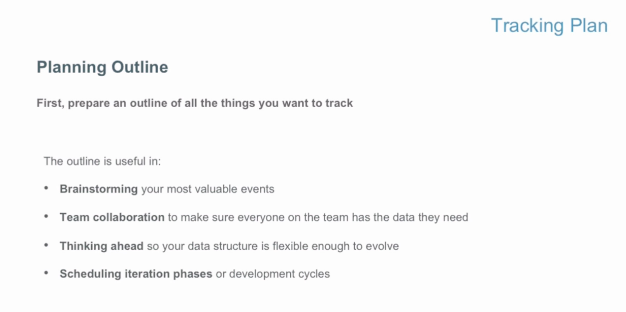
image1_planningoutline

Source: (Webinar 82) Best Practices: What to Track with your Analytics

Find clarity in your plan by creating an initial outline. Look at historical data; pinpoint any trends. Then, flesh out your outline into a detailed plan. Figure out how you can install analytics into your existing process, like sending marketing emails and launching new products.

Realize the importance of measuring ROI to receive the full benefits of your marketing dollars. ASK: How are you going to reach the anticipated ROI?

Be an investigator! Plan and search for ways to measure effectiveness in your organization by:

  • Aligning marketing analytics with financial goals.
  • Using predictive modeling in your marketing data analysis.
  • Obtaining customer engagement data from social feeds.

2. Avoid Vanity Metrics

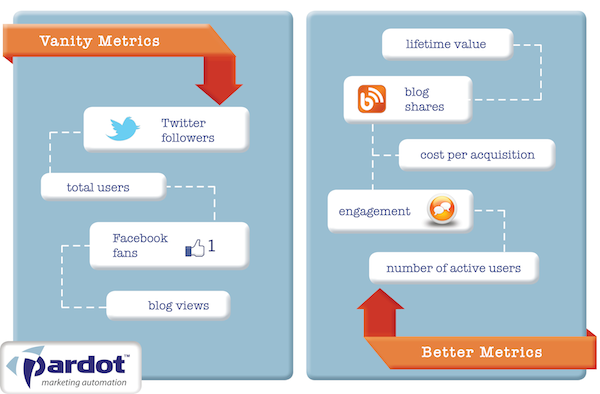
Keep away from metrics that distract your team from the business goal. Typical marketing metrics like, Facebook fans and press release shares, may impress folks, but often don’t correlate to revenue.

image2_vanitymetrics

Source: Pardot

Instead, turn your focus to engagement metrics that equate to ROI. ASK: How does this specific measurement help the company’s growth?

Jason Amunwa, Director of Products at Filament, states:

“Vanity metrics do nothing for your actual website objectives, but make your marketing efforts look good. This is problematic, because oftentimes they siphon effort and focus away from the things that could really move the needle for you. Engagement metrics tell you what content is truly performing for you, what’s just “meh”, and what’s ripe for enrichment and optimization; in short, engagement metrics tell you where the real opportunities are for growth.”

When you collect the right data, you save time and make better predictions. Leverage your tools by:

  • Creating customized reports with the data your company needs.
  • Tracking your customers’ behavior consistently.
  • Analyzing the data before, during and after a marketing initiative.

3. Sales, Sales & More Sales

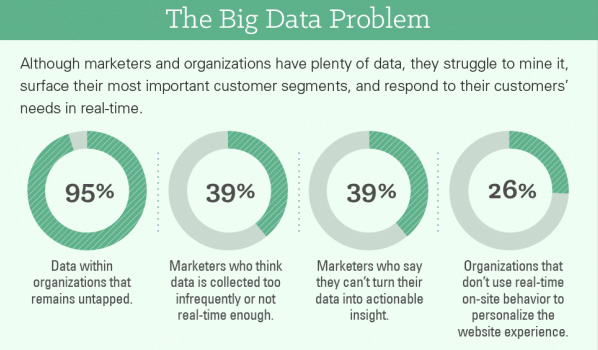
The Information Age has produced a new type of consumer—an informed buyer. People now make purchases based on blogs, reviews and social networks. The good news for your business is that you have access to the same information. The bad news: your team doesn’t know how to translate that data into revenue.

image3_bigdata

Source: From Big Data to Big Personalization

In a case study, IBM helped Trident Marketing—a marketing and sales firm with high-profile customers like DirectTV and ADT—use marketing analytics on large data sets to yield profitable results. The key business insight included “when to call a consumer, which product to pitch and which salesperson is best suited to close the sale.”

Your team can get a holistic view of the true ROI when everyone focuses on how marketing impacts sales. ASK: How are your marketing investments affecting sales productivity?

Shed light on what marketing programs are profitable. Use data to increase sales by:

  • Anchoring analytics on a strategy, not the previous year’s budget.
  • Understanding the consumer’s decision journey to purchasing your product or service.
  • Discussing ROI with the entire organization, not just the marketing and sales teams.

4. Experiment Frequently

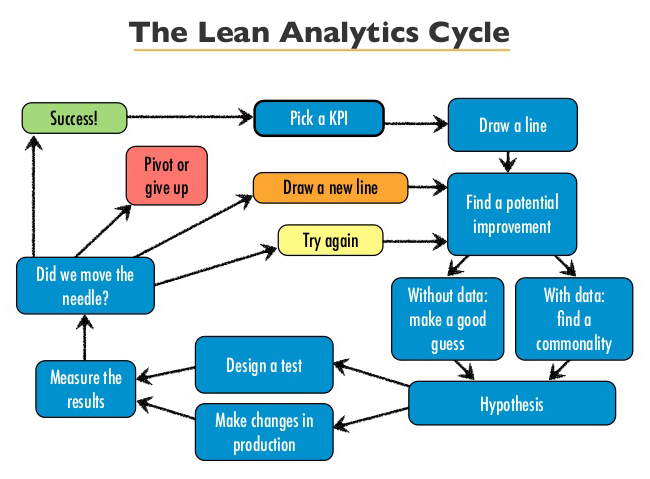
Experimentation offers opportunities for your business to accelerate its growth. Testing should not only offer insight, but also alternatives. Furthermore, it doesn’t have to be a cumbersome process; simple business experiments work well.

Try the test-and-learn approach. Take one action with one targeted group, take a different action (or no action) with a control group, and then compare the results. This method keeps the process simple, and outcomes become apparent without the hassle.

image4_analyticscycle

Source: Introduction to Lean Analytics for Lean Startup Circle SF

Telestream, a provider of software and hardware products, increased its revenue by 300% with the help of Blast Analytics & Marketing. The marketing firm conducted conversion rate optimization testing, which uncovered key findings that led to a redesigned product feature matrix. The new site design gave potential customers a better understanding of Telestream’s product offerings and persuaded them to select the higher priced offering.

Try new tactics. Recreate the marketing mix. ASK: How is your team exploring new possibilities?

Improve the returns on your marketing by:

  • Setting aside some of your budget exclusively for experimentation.
  • Picking one focus area; test until you can’t improve anymore.
  • Moving quickly from failed experiments; no benefit comes from sulking in defeat.

5. Make A Decision Without Regret

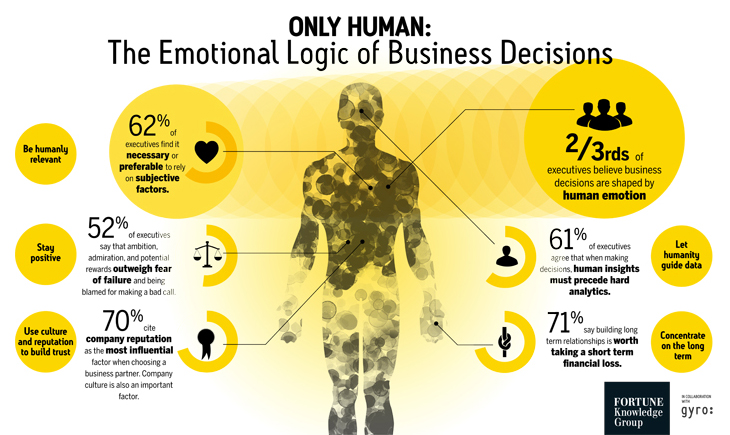
Reporting your marketing analytics is necessary for your business’s success. More importantly, your team should focus on making an informed decision from those reports. So, what’s stopping management from taking action? They may have a case of analysis paralysis.

A study conducted by Princeton and Stanford University psychologists found that we are sometimes so obsessed with filling information gaps that we may choose the wrong path. Your business may want to create one more report or consult with one more business analyst. Our challenge is to make a good decision without accumulating more data.

FKG_Gyro_infographic_1080_horiz_v4-2

Source: Emotion Beats Data in B2B Decision Making: Study – Chiefmarketer

Michael Fauscette, Vice President of IDC Software Systems Solutions Group, says that overwhelmed companies need to remember that despite whatever they’re facing, it’s still just data. Find a starting point in your data collection that will be advantageous to your brand and clients. Create success from that data; then, repeat.

Analysis paralysis is common in all types of businesses. ASK: How are you measuring your actions?

You can quench your organization’s thirst for more data by:

  • Introducing definitive boundaries on when data collection should halt.
  • Ensuring that all analytics reports include action items.
  • Creating a subcommittee to follow-up on decisions made after an analytical report.

Don’t let the chips fall where they may. Assess how your business can profit from marketing analytics. Your ROI depends on how you create and implement your business strategy. From planning to decision-making, your team can lower costs, increase sales and spread brand awareness.

About the Author: Shayla Price lives at the intersection of digital marketing, the law and social responsibility. She inspires a new breed of innovative attorneys at Hearsay Marketing. Connect with her on Twitter: @shaylaprice

22 Gmail Plugins That All Content Marketers Need to Know About

gmail

When email first came out, each time I got a new message, I loved it!

Now? I get hundreds per day—it’s not quite as special anymore.

But while the entertainment value of email has declined, its role in business has remained important.

Of all the email options out there, I’m a big fan of Gmail. It’s a free service and one of the most popular email services on the web:

image07

But here’s the thing: just using Gmail isn’t enough if you want to achieve great results in your business. You have to use it the right way.

Did you know that being interrupted by email costs the average worker an hour of lost time each day? Think about how much work could be done in that extra hour. 

Part of the problem is that we develop bad habits over the years. Radicati found that the typical employee checks their email an amazing 36 times per hour. They also send and receive 105 emails during the day.

I’m sure you’ll agree that this level of distraction is not conducive to productivity and that this volume of email for an average worker is kind of scary. It’s almost inevitable that you would lose emails and forget to do important things.

Managers are supposed to be pretty good at…well…managing things, right? But even they can’t manage inboxes well. In fact, 59% of middle managers miss at least one important piece of information from email every day because they can’t find it. Sometimes, they never see it in the first place.

As marketers, we deal with many people who have these habits every day. Heck, maybe we ourselves are guilty of some bad habits as well.

That’s why I’m going to show you how to turn your Gmail inbox into a machine, where junk is ruthlessly eliminated and valuable emails are always acted upon.

To do so, you’re going to need plugins, and lots of them.

That’s why I’ve hand-picked 22 of the best Gmail plugins that will help you clean up your inbox (and keep it clean), send emails that get opened more, and increase your email productivity.

You won’t and shouldn’t install them all, but I bet you can find at least a few that will make a significant difference in the results of your emailing efforts.

Streamline and automate sending emails

Two things always grow as you become more successful: income and emails.

Not only do you receive more email but you also send more emails—out of necessity, of course. Readers, employees, partners, and your regular friends all need your attention.

If you’re not careful, you’ll spend half your day checking and writing emails.

TNS found that workers spend the most time every week checking email:

image00

Luckily, there are some great Gmail plugins that will help you clear out your inbox faster without missing anything important.

1. Boomerang. Use it to schedule emails or remind you to send an email at a specific time.

Boomerang solves all sorts of common problems for content marketers.

Do you ever want to respond to an email, but not right away? For example, maybe you need to send an invoice in a week.

Boomerang lets you schedule when your email needs to go out. Here’s how you do it:

Once you send the email, you don’t have to worry about remembering to do it later, and it doesn’t clutter up your inbox.

One other great reason to use the scheduling feature is for your link outreach campaigns. Emailing someone at 2 AM is a surefire way to get your email buried under the rest of someone’s morning email.

MailChimp found that the highest email open rates occur between 8 AM and 5 PM.

image15

When sending emails to someone you don’t know well, schedule them to be sent during this window to maximize your chances of them being read.

While the plugin has a few other features, the next most useful one reflects why the plugin named Boomerang in the first place.

Sometimes, you can’t respond to an email right away even if you’d like to. You could be waiting for some results or for responses from other members of your team on a project.

So if someone, say a client, sends you an email asking for an update at the start of the day, you can “boomerang” the email to make it disappear from your inbox—for now—and show up at a later time marked “unread.”

This will prevent emails from being buried and forgotten. Here’s how simple it is:

2. Clientele.io. This plugin was created for marketers who want to maximize their follow-up email response rates.

If you’re dealing with busy clients but need their approval or feedback, you likely find yourself waiting for them to get back to you.

What Clientele does is it tracks the results of your normal email activity and over time determines which times are best to send emails to a certain person. You want emails not just to get opened but also replied to.

image12

Like we discussed before, many people get bogged down by piles of email. Even if they mean to respond to you, it’s possible that they just forget.

Not only will this plugin help you send the first email at the optimal time but it will also help you time a follow-up email.

3. FollowupCC. Sometimes we mean to follow up with someone, but forget to. This plugin gives you the choice to set a follow-up date when you are sending/replying to an email.

If you haven’t heard back from your recipient, you’ll get a new email in that thread reminding you to follow up.

image14

There’s another feature that made it hard to categorize this plugin. When you send emails, you have the option of tracking who’s looking at the email. The results can be seen in a sidebar as shown below:

image16

When it comes to sales, only 2% of sales actually occur on the first contact. Eighty percent occur after the fifth contact.

Even if you’re not directly involved in the sales process, you likely use email to build relationships and work with people. If you don’t ever follow up, chances are that you’ve lost a lot of business (and profit) because your emails were simply forgotten or buried.

Considering how little it takes to send a follow-up (especially with a plugin), the results are definitely worth your effort.

Give it a try—start following up regularly when you don’t hear back from a contact. I think you’ll be pleasantly surprised with the results over time.

4. Yet Another Mail Merge. Mail merges may have fallen out of fashion over the years, but in some situations they are still handy.

A mail merge, for those of you not familiar with the term, allows you to input contact information such as name, email address, and anything else you’d like into a spreadsheet. You can then send an email to all these addresses at the same time, complete with personalization.

Here’s how Yet Another Mail Merge works using a Google Sheet (spreadsheet) and your Gmail account:

5. WiseStamp: Create an email signature that stands out. If you’ve ever emailed me, you know that I have a pretty unique signature at the end of all my emails:

image18

A good email signature is a great personal branding opportunity. It’s a chance to stand out while also communicating important information without any extra effort.

If you have a really high volume of emails, adding a line like mine to your signature will significantly cut down on the number of emails people send you. In addition, it saves you from people thinking that you’re rude because of your short replies due to time constraints.

WiseStamp allows you to create a custom signature for your emails. You can include a picture, links to social profiles or websites, phone numbers, and any message you want—the sky’s the limit.

image26

Spying on prospects (a.k.a. tracking email open rate)

Where does your email go when you click “send”?

It seems as if it just poofs into the ether of the Internet.

Of course, it doesn’t disappear. You just can’t see it going into your recipient’s mailbox.

If you’re like me, you’d feel that it sucks. I want to know that my emails are ending up in inboxes and being read, not being filtered into junk or promotional tabs.

If you’re emailing someone influential, it could be days or weeks before you hear back…or never.

James Altucher once shared that he had 105,591 unread emails in his inbox. Wouldn’t it be helpful to know if he had at least opened an email you sent? You bet. Then you could follow up or try to get in touch through different means.

This is where the following plugins come in handy. They allow you to see when emails you send are opened and how often. You can use this information to improve your email open rate over time.

6. Yesware. When you send an email, all you need to do is check the box beside “Track” at the bottom. Yesware will track all future actions your recipient takes with your email.

image22

You have two types of ways to view the results of tracking. There’s a limited collapsible panel above your inbox that you can use to view the most recent email data, or you can dig into detailed reports on the Yesware website.

image05

In the detailed reports, you can analyze your results for all the major metrics such as clicks and opens.

If you’re running an email outreach campaign, chances are you’ll be emailing hundreds of people with similar subject lines.

By creating a few variations of your subject line, you can split test which one gets the most opens and positive responses. Take the winner as your new default, and then begin a new test during your next campaign.

Finally, Yesware also lets you create and save email templates. If you find yourself sending a lot of similar emails, just create a template and insert it into your next blank email. This feature can save you a lot of time during email outreach campaigns.

7. BananaTag. This plugin is very similar to Yesware. Just click the tag option at the bottom of any email, and you will be able to see exactly when and who is opening it later on.

The analytics are also very solid, allowing you to examine your email open rate over time and improve it through experimentation.

image24

One final note: they’ve also released a beta tool that allows you to schedule sending emails, which may eliminate the need for an extra plugin.

8. ToutApp. This plugin is a little more robust and meant for a team use. It features similar tracking capabilities as the other plugins in this section, e.g., email opens, interactions (clicks/downloads), and replies.

ToutApp also features easy to save and use templates, which can speed up any repetitive outreach efforts.

I’d say the biggest difference between ToutApp and the other plugins in this category is that ToutApp focuses on tracking by the person rather than the email. This is a major benefit if you communicate with certain people over and over again and really want to learn which emails they respond to best.

image21

Finally, note that ToutApp is exclusively a paid one. While they offer a 14-day free trial, there is no free level. It’s meant more for teams and professional marketers rather than those that are relatively new to the field.

9. Sidekick. This plugin was developed for Gmail by HubSpot and released as a free version (paid plan available). Just like the other plugins in this category, it tells you when and who opened your email.

On the free plan, the reporting is pretty basic and isn’t quite up to par with the other options. It’s not as easy to see overall clicks and opens over time.

The one neat feature of this plugin is customer insights. When you send an email, the Sidekick sidebar will emerge on the right of the screen and attempt to pull up relevant social media information of your contact.

image02

Unfortunately, I found this to be really hit or miss, and often the plugin couldn’t find any information on a contact.

Boost sales with a Customer Relationship Management (CRM) plugin

Despite purchasing a CRM startup a while back, I don’t write much about CRM on Quick Sprout or the NeilPatel.com blog.

That’s because CRM is for sales, not marketing. CRM tools help you track your relationships with leads and nurture them down your sales funnel.

That being said, I know that some of you are involved in both marketing and sales. Since there are some great Gmail CRM plugins, I wanted to give you a few options.

These are all fairly comprehensive tools, so the best I can do is highlight the main benefits for choosing each, and you can read up on them on your own if interested.

10. Streak. Unlike most other CRM tools, Streak is specifically designed for Gmail, which gives it an advantage over many of the best-known CRM companies.

It features a lightweight dashboard that’s built right into Gmail. You can color-code prospects as they move through each stage in your funnel.

image23

The big reason a CRM like this is helpful is that it takes a complex set of data and puts it on an easy to see chart/spreadsheet. Even with several leads at different stages in your funnel, you won’t forget to follow up with anyone.

And while this is typically meant for sales, there’s no reason why you can’t use a similar process for building relationships with influencers.

In addition to having standard CRM features, Streak also gives you other basic business tools that you might be interested in such as:

  • email support (customer service)
  • project development
  • fundraising
  • bug tracking

image13

11. WORKetc CRM. This is another highly rated CRM plugin for Gmail. It’s not as pretty as its competitors, but it performs well.

This CRM plugin is designed for teams, and it excels in that area. In addition, it has great built-in features for project management and billing, which is a huge asset for certain businesses.

Instead of being built right into Gmail, it syncs with Gmail. Sometimes this is inconvenient, but it can be beneficial if you’re working with outside docs and calendars that you want to sync up.

Here’s a more in-depth video of its features:

12. ProsperWorks (formerly Strideapp). Recognize the handsome guy on the homepage? That’s the startup I was talking about earlier. It’s another Google App designed for Gmail users (rather than a poor adaptation of an app).

It is simpler than some of the alternatives, but that’s also a good thing for anyone looking for a lightweight CRM. It is a CRM tool, and it does CRM well. And while it syncs with your Google calendar, contacts, etc., it doesn’t try to handle billing or project development.

image19

Obviously, I’m biased, so let me instead copy part of a review from a user:

“[Where] The extension really SHINES are the task management features. There are so many situations where several of us are involved in working on different activities for one prospect that are all tied together. It eliminated ugly spreadsheet pipelines, strings of forwarded emails, and hours spent searching/coordinating things.”

You’ll get a standard sidebar when in Gmail, showing you your contact history and profile:

image25

Learn everything about the person you’re emailing

Even though sales is typically thought of as separate from marketing, there is some overlap.

You might have noticed that the sidebar in the screenshot of ProsperWorks has a ton of contact information on the person the email is being sent to. This has obvious benefits. No more forgetting what you’ve covered or asking embarrassing questions.

The plugins in this section are dedicated to this one important function. In addition, they can help you find contact information if needed.

Can you imagine sending an email to someone and being able to say, “I saw your tweet yesterday about X—it was great,” or something along those lines?

Or asking about a family member or a hobby your contact brought up months or years ago? Who isn’t going to appreciate that?

And these plugins can help you do that without you having to go out of your way. Most have a way to add important notes or check recent social media activity of your contacts.

13. RapportiveAbout five years ago, Rapportive was the king in this area. It was pretty much the first plugin to do this sort of function right, which quickly led to its rise in popularity.

But since it was acquired by LinkedIn in 2012, Rapportive has lost its stranglehold on the niche. Many of its original features were stripped away to emphasize LinkedIn, and some performance bugs led to the rapid creation of alternative plugins.

The Rapportive sidebar today is fairly solid and draws its information directly from LinkedIn. This is a good thing if your contact uses LinkedIn, but it’s not very useful if they don’t.

image06

14. Discoverly. One of the first major competitors to Rapportive was Discoverly. It has a lot of features similar to the original Rapportive.

You’ll see the sidebar widget on the right side as usual, and it contains links to the displayed contact’s profiles on popular social networks, such as Facebook and Twitter as well as information about connections (friends) and some recent activity.

It’s fairly simple, but that’s the appeal.

image08

15. Full Contact. This is one of the latest rising competitors to the now crowded space of contact profiling widgets.

image04

It also features a fairly simple but very attractive design. On the main panel, the social activity is downplayed in favor of other information. While there are links to social networks (small logos), there is a lot of space dedicated to allowing you to add tags or notes to a contact.

In addition, it clearly displays your contact’s location and time zone, which can be very handy when scheduling emails. If you want to see recent social activity, you simply click on the social tab at the bottom of the widget.

The most important thing is that it seems to be one of the most reliable plugins currently when it comes to finding contact information, which is the biggest challenge for plugins in this area.

Waste less time in your email inbox with productivity plugins

As a marketer, you know that your most limited resource is your time. And if you’re spending half of your day in your email inbox, you likely aren’t using it effectively.

Email, like social media, is both a tool and a recreational outlet. It’s easy to confuse value-creating work with fun.

That’s why I recommend using Gmail plugins to maximize your productivity.

Everyone has their own productivity kryptonite, which is why I’ve included plugins that address a wide variety of productivity issues.

16. Unroll.me. How many emails from other marketers do you end up deleting 90% of the time after glancing at them for a few seconds?

It’s normal to sign up for email lists. You might do it because you’re actually a fan of someone’s work or you just want to see what they’re up to. But over time, you’re likely to find yourself on a lot of lists that end up overwhelming you and your inbox.

The point of Unroll.me is to consolidate all the messages that you do want to read into one easy-to-read email per day.

You can also easily go down the list of your current subscriptions and unsubscribe from any lists you don’t want to be on with one click. Sure, this will take you a few minutes now, but it’ll save you hours over the long run.

image11

17. Assistant.to. Ever get sick of trying to find a meeting time that works for both you and the other party? To help you with this task, this plugin is the best free plugin out there for you.

This plugin integrates with your Google Calendar to let you easily select free time in the upcoming days that you could use for meetings.

In the actual email you’re sending, you enter the length of time required for the meeting, then click on the free time in your calendar. The plugin formats the different time options so that your recipient can just click on a time that works for them, and the meeting will be automatically set.

image03

18. ActiveInbox. While some of us are better or worse than others, most people procrastinate until a deadline comes up. This plugin was created to deal with that problem.

You can go through a large batch of emails and assign them both a priority and a due date. They will be arranged in a logical order so that you can deal with them most efficiently.

image10

One caveat: There’s a free trial, but after that, it’s a paid tool (a few dollars a month). You should know by the end of the trial if the tool is worth paying for.

19. AwayFind. Put your hand up if you’re constantly checking your email throughout the day. Almost everyone does.

It’s obviously a huge waste of time and distracts you from doing actual work that produces value.

This plugin was created so that you could stop checking your inbox without worrying about missing anything important.

You create filters with it so that if a certain person sends you a message within a certain time frame, you will get a phone call or text to your cell phone with the text of the email.

image27

This way, you’ll still get emails you want to read immediately within the time frame you want, but the less important stuff will wait for you until later.

20. Send & Archive. This plugin is actually built right into Gmail. It’s designed to help you get rid of all those long email threads.

When you reply to an email thread, it stays in your inbox unless you move it. With Send & Archive, as you might have guessed, the email automatically gets archived (you can still retrieve it later if needed).

To enable Send & Archive, click on the gear near the top right of your inbox, then click on “Settings.”

image09

Next, click the radio button beside “show ‘Send & Archive’ button in reply” to turn it on.

image01

Now, when you reply to an email, you’ll see a second “send” button. The one with the box with a down arrow will automatically archive the email after you send it.

image20

21. The Email Game. Who said answering emails can’t be fun? This plugin isn’t for everyone, but if you find that it takes you a long time to slog through your emails every day, it might help you.

Once started, the plugin will give you a time limit to respond to each email. As you answer each email, the progress bar fills up until you finish answering all emails.

Obviously, this plugin isn’t good if most of your emails require carefully thought-out responses.

22. Taskforce. Taskforce is a really handy to-do list that you can edit on the fly in Gmail.

This saves you from having to record things that you need to do in another spreadsheet or text file. In the case that you don’t write down tasks in the first place, this saves you from continually having to search for and open emails.

Additionally, you can add people to specific tasks. When you finish the task, they’ll get an email update.

image17

Conclusion

I really hope that you were able to identify areas where you could become more effective and/or efficient when it comes to emailing and found a plugin in this list that could help you improve in those areas.

Remember that Gmail is a tool (a good one), and you need to adapt it to your needs to make the most of it.

With the plugins in this article, you should be able to:

  • get higher open and response rates
  • spend less time checking email
  • maintain a cleaner email box
  • miss fewer important emails
  • stress less about your inbox
  • integrate Gmail into your marketing efforts for more profit
  • make answering email less of a chore

I’ve given you 22 great plugins, but there are hundreds more out there. If you want more options or find a new problem, don’t be afraid to look around.

If there’s a particular plugin that you love that didn’t make this list, let me know in the comments below.

Solar Deck Lights and Solar Post Lights

Solar lights and solar lights bridge post capitalization can significantly improve your deck, patio, stairs or ramp, and improve safety and security around your home. With good planning and good lighting, your deck can easily become a place of calm evening relaxation. With solar, you can turn your average spectacular terrace with a variety of lighting options.

Adding solar energy to its platform is a fast and easy way to increase the attractiveness and functionality of your outdoor space. Through effective solar technology, solar deck lights receive their energy from built-in batteries charged during the day by solar energy, with a built-in light sensor that automatically turn lights at dusk and dawn. Load and operating time varies depending on the season and location, so that increased exposure to sunlight produces and runtime at night.

Step solar lights for safety: A major factor in the design of lighting for your deck is security issues to protect your family and guests. Well lit staircases reduce the risk of slipping or falling. Adding solar lights stage housing for its actions is particularly important when there is any kind of light that illuminates the stairs to his night on the terrace. Solar lights are available in a variety of styles to combine their efforts, and email and sunlamps lanes to improve key areas around the stairs and steps.

Lights down to Ambience: soft lights strategically placed along the perimeter of the roof and the positions will create a warm and welcoming space. Solar deck lights are available in a variety of styles including low profile lights that provide down lighting to highlight your post or railing. This type of design will also create an environment conducive to intimate conversation and shows sophistication.

LED colors to celebrate: Adding colorful lighting to your deck will provide a call for the upcoming holiday. Solar deck lights are available in a variety of colors of LED. With distinctive designs and variety of lighting options on the market today, you can create a dazzling experience the floor of your deck to its highest peak.

Solar lighting Bridge is one of the fastest growing options for improving your outdoor space. There are a number of ways to integrate solar energy into its cover. Start by thinking about where light is needed for practical reasons. Whether you are adding lights to your deck for safety on stairs or installing lights to submit to add a little atmosphere, a wide range of energy efficient solutions they are available to illuminate your covered in style.

Chiropractic Care Tips And Advice For The Beginner

Is back pain a daily concern for you? For many people this is the case and they often need help in finding relief. This article is designed to do just that. You will find valuable information that can help you get the chiropractic care that you need. Keep reading to learn more.

More and more medical doctors are working in conjunction with alternative providers today. Because of this, you should check to see if you have medical insurance that allows you to get coverage for massage, acupuncture, or even chiropractic care. These provisions help you to get the most out of your chiropractic care.

Properly get out of your bed each day. Before you get up, do a few stretches before you slowly rise up. Gently sit, lower your feet to the floor and support yourself out of bed. Getting out of bed this way can reduce spinal injuries.

Acid reflux, gas and heartburn can be caused by a misaligned spine. The nerves running through the thoracic area of the spine control the stomach functions and can cause these and other digestive disorders. When a chiropractor adjusts your spine, the nerve flow to the stomach is aligned which helps improve your digestion.

Ask your doctor at Chiropractic Victoria what type of stretching he or she recommends between visits. Half of chiropractic care happens on the outside of the office. It's up to you, in your own home, to make the best of your time with the chiropractor. Be sure to stretch and exercise. It'll make a big difference.

Many types of health issues can be helped by chiropractic care. Since most nerves and muscles of the body originate in the spine, misalignment of the spine can result in various pains and health issues throughout the body. Chiropractic adjustments can be very helpful in any pain related to nerves or muscles.

Don't get frustrated if the pain returns after a few days. You'll usually get a chiropractic surge of energy following an adjustment. Your body will feel great! But that may wear off after a few days. This is why multiple treatments are often needed to get your body back in the shape it needs to be. Over time, your body will feel better and better.

Any chiropractor who is seeing you for the first time should take X-rays to determine if any bones are broken, and if there is a noticeable misalignment. The first appointment should also include history of your health and any ongoing problems, as well as a discussion about the planned treatment.

Chiropractic care focuses on your skeletal and nervous system and the functioning of your brain. The central nervous system and brain control all the functions of your body, so regular chiropractic care can lead to excellent overall health. When your central nervous system is functioning properly, all of your autonomic functions, such as heartbeat, breathing and digestion work unimpeded.

As you can see, there is a lot of information available to sufferers of back pain. There are strategies and tips, as you have seen here to make getting good chiropractic care easy. Learn all that you can, but start getting the help you need soon. Your back will thank you.

Learn more at http://www.victoriachiro.info/